Morpheus Institute for Integration
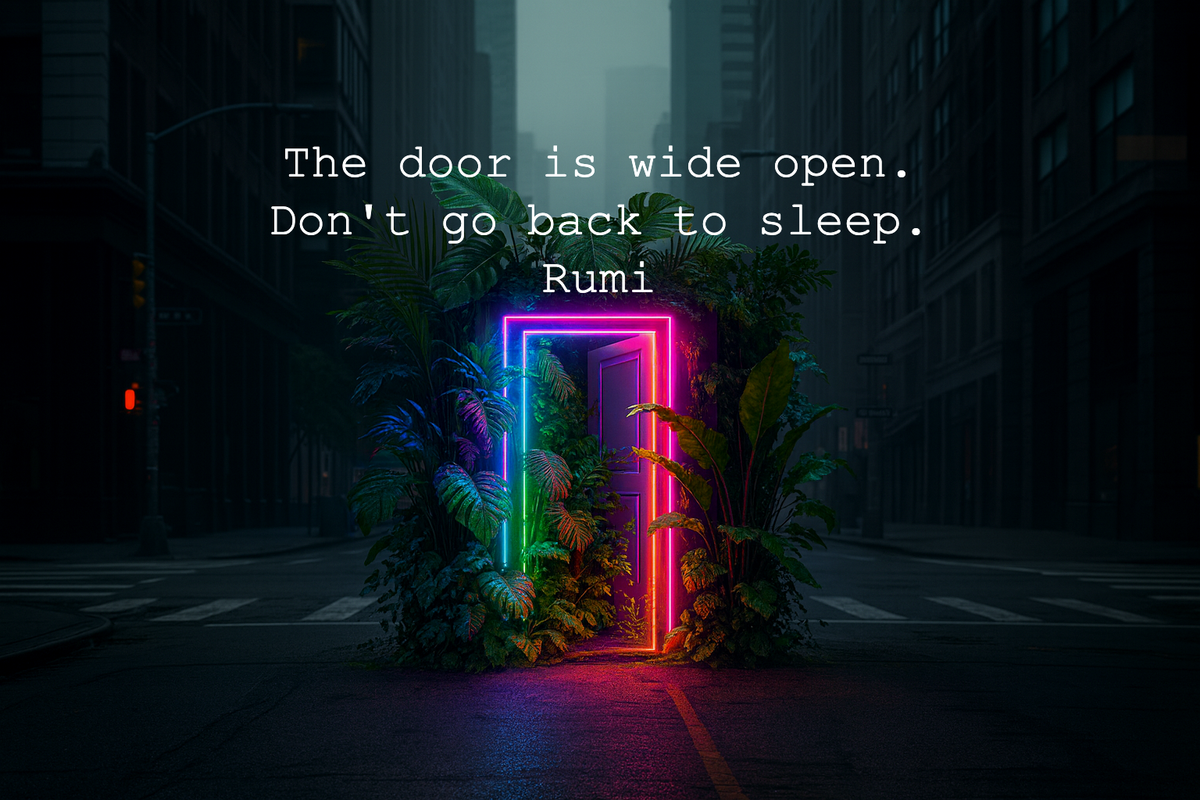
You woke up. Now what?
The retreat changed you. You touched something true. But once you left the retreat, you realised - the hardest part isn't the breakthrough. It's what comes after.
The Morpheus Institute for Integration (MII) is your guide for the after. A place to find the others, to walk beside each other while we do the work of building lives that reflect who we really are.
Circles, ceremonies, and daily practices to support your integration journey.
Launching early 2026.
Sign up below if you're interested in staying connected. Thank you!
Get in touch
I’m Nadia - a facilitator trained in breathwork, mindfulness, embodiment, authentic relating, and ritual, holding grounded, trauma-aware spaces shaped by reverence, curiosity, and a love of the mystery.
If you’d like to connect or explore collaboration, I’d love to hear from you: nadia.schweimler@gmail.com

Morpheus Institute Mission
To create a home for long-term integration.
A place to find the others: where insight becomes embodied change, where people are met in the tender space after profound openings, and where transformation is supported through community, structure, and daily practice.
MII exists because so many of us have internalised stories that keep us small and distant from our own truth. Integration is how we unlearn those stories and begin to live lives that feel true and self-authored. It's a place to remember that though we are many, we are of one heart, and though we are far apart, we are not alone.
“Without community, there is no liberation.”
Audre Lorde
The part most people don’t realise is the journey
So many people today are having profound openings through meditation, breathwork, deep nature retreats, plant medicine, or unexpected moments of grace. These experiences matter. They are part of a wider cultural awakening. They often remind us of what is most true and most alive in us.
And then we return to our day-to-day reality.
We return to relationships, emails, daily routines, and the subtle gravitational pull of our old selves. Not because anything went wrong on retreat, but because insight is only the beginning. As Dr Rick Hanson notes, experiences do not automatically rewire the brain. They must be deliberately internalised to become part of who we are¹.
Integration is this internalisation.
It is where we learn to live from what opened in us.
Transformation is not a single peak moment. It is the slow weaving of a new way of being into everyday life. And without support, repetition, and anchoring, even the most profound openings tend to fade.
Why integration is so hard to do alone
Everyone wants transformation. Nobody wants to change.
It is profoundly human to struggle with change. Most of us return from retreat or deep inner work with a sense that something in us has shifted, yet the structures of our lives have not. It is easy to think I’m the problem, or why can’t I make this stick.
But the truth is that integration is an often challenging process, and we are not meant to navigate these territories of transformation in isolation. It is the work of a collective.
As interpersonal neurobiologist Dr Dan Siegel emphasises, human beings integrate experience through relationship:
“Human connections shape neural connections.”⁶
Early research backs this up. Studies exploring post-retreat and post-psychedelic experiences describe a common pattern: people often report emotional intensity, disorientation, or uncertainty in the weeks after a major opening, especially without adequate support³ ⁴.
After a retreat, the group dissolves. The people who understood what opened for you scatter back to their lives. Meanwhile, you may be seeing your own life more clearly. Many of us come home and realise we have been trying to remain well adjusted to structures that no longer serve us. As Krishnamurti said:
“It is no measure of health to be well adjusted to a profoundly sick society.”
Integration is the work of becoming more authentic, more expressed, and more aligned with what truly matters, even inside a world that often pulls us back into old conditioning. That work is tender, brave, and deeply human.
Why support and structure matter
The science is clear. Insight alone is not enough.
James Clear reminds us:
“You do not rise to the level of your goals. You fall to the level of your systems.”
Integration is about creating a system for your transformation.
Across fields as diverse as neuroscience, trauma studies, contemplative science, and behavioural psychology, a consistent truth emerges:
Change becomes real through repetition, reflection, and relational support.
• Rick Hanson calls this “installation,” the process through which an experience becomes woven into neural structure¹.
• Richard Davidson frames well-being as a trainable skill strengthened through intentional practice².
• Behavioural science shows that small, meaningful actions, especially when ritualised, are what reshape our habits and identity over time⁷.
• Trauma research emphasises the need for co-regulation, safety, and belonging as the foundation for transformation⁵.
Ritual in both senses supports this.
There are the micro rituals of daily life, the small and repeated behaviours that anchor new patterns. There are also the meaning marking rituals that help us cross thresholds, honour transitions, and stay connected to the wider rhythms of our lives. Together, they offer the structure and coherence our nervous systems need to adapt and grow.
“Small changes, consistently repeated, compound into remarkable results.”
James Clear
Integration research is still young. Much of what we know comes from adjacent fields, but what those fields collectively show is compelling. Without support, meaningful experiences rarely become lasting change.
MII is a home for that journey
MII was created for this tender, powerful phase. Not as another overwhelming programme or self-improvement project, but as a place where integration becomes communal, grounded, and supported.
Here is what you will find inside MII:
• Integration circles that meet regularly for shared reflection, grounding, and support
• Habit scaffolding and daily micro practices inspired by behavioural psychology
• Nervous system regulation tools to help you navigate expansions and contractions
• A long-term community of familiar faces who truly get it
• Guided rituals to honour thresholds, transitions, and inner change
• Regular accountability touchpoints that feel compassionate rather than pressuring
• Personal integration mapping to help you understand your patterns, intentions, and next steps
• Space to explore identity, purpose, and alignment without overwhelm
• Support to build a daily practice of meditation, breathwork, embodiment, or contemplative inquiry
• A place where you can belong while becoming who you are becoming
MII is not a replacement for therapy, and does not offer clinical treatment.
Here, you do not have to figure it out alone.
You show up. We hold the structure.
Together, we walk the long arc from insight into embodied change.
Because the world changes when we do, one nervous system, one choice, one practice at a time.
Who am I
I came into this work the long way - through ceremony, breathwork, plant medicine, meditation, shadow work, and a lot of honest self-inquiry. Those experiences taught me that awakening isn’t the hard part; it’s what happens after.
I’m a certified healing breathwork practitioner (trained by David Elliott) and completed the EMPOWER training with Gaia Harvey-Jackson in mindfulness, embodiment, authentic relating, and ritual. My facilitation style is grounded, spacious, trauma-informed, and quietly reverent - woven with a love of poetry, humour, and the mystery that keeps all of us searching for what’s real.
Before this, I spent over a decade working in climate and systems change.
Footnotes
¹ Rick Hanson, Hardwiring Happiness: The New Brain Science of Contentment, Calm, and Confidence. 2013.
² Richard J. Davidson, Center for Healthy Minds, University of Wisconsin–Madison. Overview of research on trainable well-being and neuroplasticity
³ Lyons, T. & Carhart-Harris, R., Increased nature relatedness and decreased authoritarian political views after psilocybin for treatment-resistant depression.
Journal of Psychopharmacology, 2018.
⁴ Bathje, G. J., Majeski, E., & Kudowor, M. Psychedelic integration: An analysis of the concept and its practice. Frontiers in Psychology, 13, 824077. 2022.
⁵ Bessel van der Kolk, The Body Keeps the Score: Brain, Mind, and Body in the Healing of Trauma. 2015.
⁶ Daniel J. Siegel, The Developing Mind: How Relationships and the Brain Interact to Shape Who We Are. 1999.
⁷ James Clear, Atomic Habits: An Easy & Proven Way to Build Good Habits and Break Bad Ones. 2018.